
Framing & Doors
Openings That Function Correctly Every Time
Framing and Doors in Portsmouth for misaligned openings, binding doors, and structural modifications
Doors that bind, won't latch, or have uneven gaps around the frame usually indicate framing issues rather than hardware problems. The rough opening may be out of square, the header may have sagged under load, or settling may have shifted the frame out of alignment. F and A Home Improvement, LLC provides framing services and door installations in Portsmouth, Hampton, and Norfolk that address both the structural opening and the finish components that operate within it.
Framing work involves building or modifying the structural skeleton that supports walls, carries loads, and creates openings for doors and windows. Door installation requires a plumb, level, and square rough opening so the door can swing freely without binding and the latch can engage consistently. When openings are out of tolerance, the frame must be corrected before the door is hung.
Arrange an on-site consultation to review structural requirements and door specifications for your project.
How Framing Affects Door Performance
The rough opening must be sized correctly for the door unit, typically adding two inches to the door width and two and a half inches to the height to allow room for the jamb, shims, and adjustments. Framing lumber must be straight, headers must be sized to carry the load above without deflecting, and king studs and jack studs must be positioned to transfer that load to the foundation. Twisted or bowed framing lumber creates openings that can't be shimmed into tolerance.
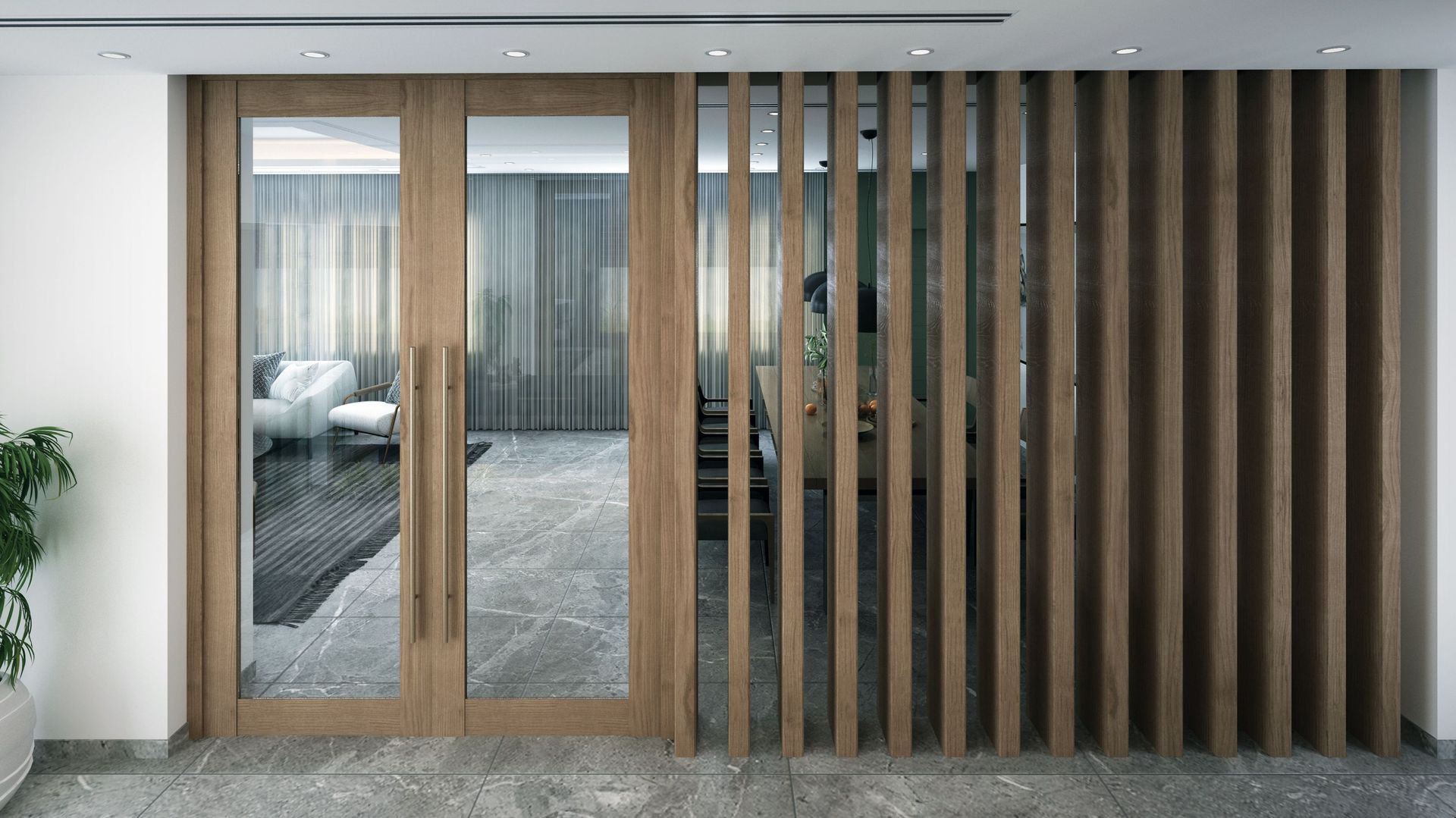
After door installation, you'll notice doors that swing smoothly through their full range without scraping the floor or contacting the jamb, latches that engage without forcing, and consistent gaps around the perimeter. The door will stay in position when opened partially rather than swinging open or closed on its own, which indicates the frame is plumb and level.
Framing modifications for new openings or enlarged doorways require temporary support for loads above while the existing studs are cut and headers are installed. The header size depends on the span width and whether the wall is load-bearing, which determines whether it carries roof weight, floor weight, or only the wall's own weight.
Questions Before Starting Your Project
Framing and door work often involves structural considerations that affect both the installation process and long-term performance.
- What makes a door bind or fail to latch properly? Binding and latch problems typically result from the rough opening being out of square, the jamb not being shimmed plumb and level, or settling that shifts the frame after installation.
- How is a load-bearing wall different from a partition wall? Load-bearing walls carry structural weight from above and require engineered headers over openings, while partition walls only divide space and can be modified with simpler framing.
- What affects door installation in older homes in Portsmouth? Older homes often have settled foundations, out-of-square openings, and non-standard dimensions that require custom shimming and adjustments to achieve proper door operation.
- When should a door be replaced versus adjusted? Replacement is necessary when the door itself is damaged, warped, or the wrong size, but many operational problems can be resolved by correcting the frame and rehanging the existing door.
- What is included in a complete door installation? A complete installation includes the door slab, jamb, hinges, lockset, trim casing on both sides, and proper weatherstripping or threshold for exterior doors.
F and A Home Improvement, LLC assesses framing conditions and load requirements before door installation or structural modifications. Schedule a property evaluation to identify specific framing concerns and door options for your space.